
“Domestic Violence is the only crime where the victim is asked to explain themselves more than the abuser.”
I am sharing my story to bring awareness to domestic abuse, help others recognize warning signs, and offer hope to those rebuilding their lives after abuse. My goal is to help others trust their instincts, recognize unhealthy patterns sooner, leave safely with a plan in place and understand that healing is possible.

My hope is that others will awaken to the truth of what they are experiencing, rise above the patterns that keep them stuck, reclaim their power, and ultimately thrive. Healing is about becoming stronger, wiser, and more grounded in who you are meant to be.
One of the most important things I have learned is that abuse rarely begins with violence. More often, it begins with charm, affection, attention, and the feeling of being deeply understood. It can feel as though you have met someone who shares your values, dreams, and vision for the future. You may believe you have found your soulmate.
That is what makes unhealthy patterns so difficult to recognize when the relationship begins to change.
Many professionals describe this early stage as “love bombing,” “mirroring,” and “future faking,” where intense affection, attention, and apparent compatibility create a powerful emotional bond. Looking back, I can see how easily I was drawn into relationships that felt familiar, exciting, and full of promise.
I also recognize that I enjoyed being pursued. There was something validating about feeling chosen, desired, and deeply valued. The attention, effort, and intensity felt romantic and meaningful, especially when it appeared to be rooted in shared values, goals, and a vision for the future.
In my experience, these relationships often moved quickly. I was made to feel deeply understood and led to believe I had found someone who shared my dreams, beliefs, and hopes for the future. I heard many of the things I had always hoped for in a partner—promises of love, loyalty, commitment, and a life built together. Because the connection felt so genuine and meaningful, it became easy to trust and much harder to recognize warning signs when the relationship gradually began to change
Abuse comes in many forms—verbal, emotional, psychological, financial, physical, social, and through manipulation, intimidation, isolation, and coercive control. It often begins like a dream, not a nightmare, which is why confusion is one of the greatest barriers to leaving. Survivors are often left trying to make sense of two very different versions of the same person, holding onto who they believed that person was and can be while struggling to accept who they have become and actually are.
I have always been highly empathetic, optimistic, and caring. I am a natural helper and problem-solver, and because of my own life experiences, I also developed people-pleasing tendencies. I often saw the best in others, gave second chances, and believed that with enough love, patience, and understanding, most problems could be worked through. While those qualities are strengths, they also made it easier for me to overlook warning signs, ignore my own needs, and remain invested in relationships long after they had become unhealthy.
For years, I believed that if I communicated better, loved harder, forgave more, or worked on myself enough, things would improve. What surprised me most was that I had already spent years doing the work. I had invested in therapy, personal growth, healing from previous relationships, strengthening communication skills, and learning healthier relationship patterns. Yet I still found myself in situations that left me questioning my reality and my judgment.
Over time, I came to understand that labels matter less than behaviors. Whether someone is described as narcissistic or something else, what matters is the impact of their actions. Manipulation, deception, control, intimidation, isolation and verbal, emotional, financial, or physical abuse can cause profound harm regardless of the label attached to them. I also came to realize that it only takes one person engaging in abusive behavior to create an unhealthy and damaging dynamic.
I learned the hard way that just because your intentions are good does not mean everyone else’s are. For years, I viewed others through the lens of my own heart. I’ve learned that not everyone approaches relationships with the same honesty, loyalty, or integrity
I’ve also learned that the small clues and red flags are rarely the whole story. More often, they are the first glimpse of a much deeper deception that has yet to be revealed.
One of the lessons I learned is that leaving a harmful partner is often only the beginning of the journey. In my experience, the process of rebuilding can be far more difficult than people realize. Survivors are frequently left navigating betrayal, emotional trauma, legal and financial challenges, concerns for their safety, and the overwhelming task of rebuilding their lives while trying to make sense of what they have experienced.
I also learned that the end of a relationship does not always mean the end of the abuse or conflict. Professionals who study abusive relationship dynamics note that challenges can sometimes continue after separation through ongoing disputes, unwanted contact, pressure, harassment, stalking, intimidation, accusations, conflicting narratives, efforts to challenge a survivor’s credibility, third-party involvement, or attempts to maintain influence and control.
These experiences can create significant emotional, social, financial, and legal challenges while making it more difficult for survivors to protect their well-being. In some cases, survivors may also face the difficult reality of changing homes, routines, employment, or support systems in order to regain a sense of safety, stability, and peace.
Many survivors find themselves carrying the burden of documenting events, preserving evidence, seeking support, and proving patterns of behavior while simultaneously trying to move forward. As a result, recovery is often far more complex than simply leaving the relationship
That reality is one of the reasons I am passionate about helping others recognize warning signs early. Too many people stay with abusive and unhealthy partners hoping things will improve, only to find themselves facing escalating emotional harm, financial hardship, legal challenges, threats to their safety and sometimes damage to their self esteem.
My hope is that by sharing my story, others will learn to trust their instincts sooner, seek support, make a plan to leave earlier and recognize that love should never require them to sacrifice their safety, dignity, peace, or sense of self.
Nine days after the man I believed I would spend the rest of my life with asked my father for my hand in marriage—and just nine days before my birthday—my world changed.
Like many people, I wanted to believe the best and trust that things would improve. Looking back, I can see that God was guiding and protecting me, even when I could not fully understand what He was trying to show me. Sometimes He gives us small clues along the way, but we are not always ready to receive them. In His timing, He brings clarity in a way that becomes impossible to ignore
What felt confusing at the time ultimately became an act of protection. The experience taught me that when God reveals the truth, it is not to harm us—it is to guide us toward healing, freedom, and a future greater than we imagined.
When we first met, and even during many of the good moments that remained until the end, the connection felt extraordinary. We laughed constantly, finished each other’s sentences, attended church together, and genuinely enjoyed each other’s company. Whether we were fishing, hunting, cooking dinner, playing with our dogs, chasing waterfalls, walking dirt roads, sitting under the stars, working the business together or simply running errands, we found joy in life’s simplest moments.
Like many relationships, ours was not perfect. Over time, I experienced periods of anger that seemed to become more frequent and intense, often leading to conflict and instability. The contrast between moments of connection and periods of tension created extreme highs and lows that became increasingly difficult for me to understand and navigate.
Arguments were often followed by apologies, promises to do better, reconciliations, and reunions fueled by my hope that things would improve. Looking back, those cycles made it difficult for me to recognize unhealthy patterns because each reconciliation renewed my belief that lasting change was possible.
As the years passed, my investment deepened. I built my life around the future we discussed. I supported him personally and professionally, contributed to the growth of the business, cared for family members during times of illness, managed many household responsibilities, cared for our pets, and invested significant time and energy into building a life together.
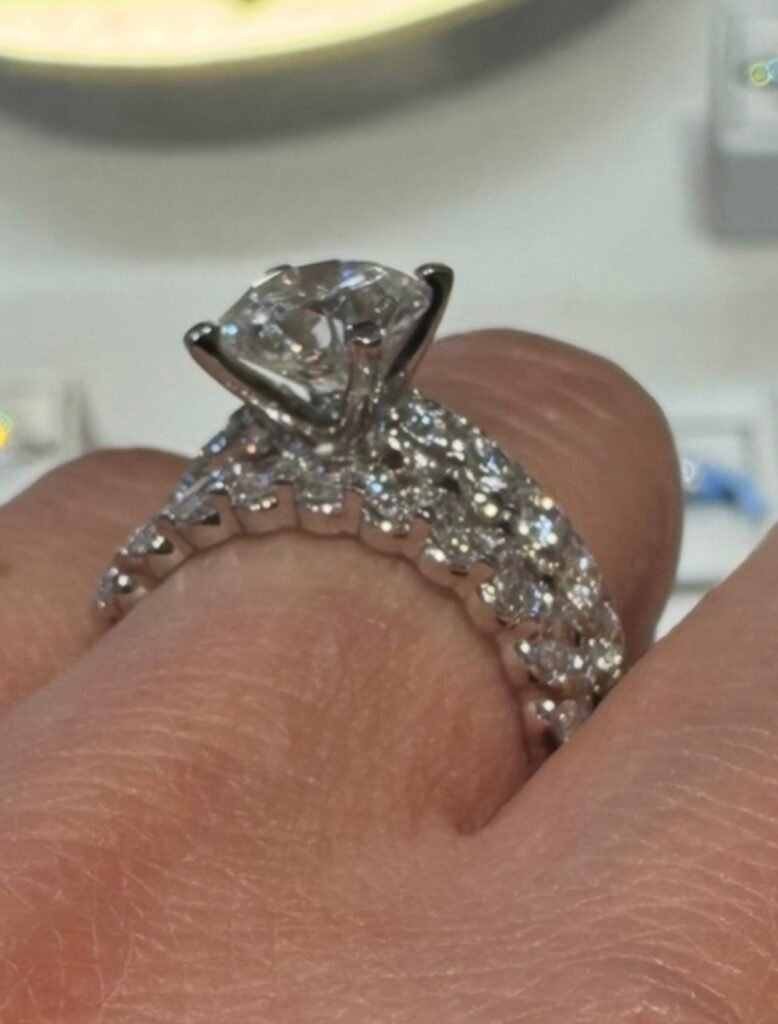
We spoke often about marriage. I chose an engagement ring and spent countless hours designing the home that was being built for us. I believed I had found someone who shared my values of faith, loyalty, honesty, commitment, and family. I trusted the future we discussed because I loved him and believed it was real.
Years earlier, concerns involving a former partner had contributed to a lengthy separation in our relationship. During that time and afterward, I received repeated assurances that there was nothing inappropriate occurring and that any contact was limited to co-parenting responsibilities. In the years that followed, she was not a part of our daily lives, and I encountered her only a few times. As trust developed, we became comfortable sharing many aspects of our lives openly. Because of that openness, and because the issue appeared resolved, it no longer felt like a significant concern.
After many months apart, I ultimately accepted those explanations, chose to trust what I believed, and continued building a future together.
The first significant betrayal and turning point came following an incident that I experienced as physical violence. The event caused me to reevaluate the relationship and ultimately conclude that I needed distance.
I believed that creating distance would be the beginning of healing, but the process proved far more complicated than I anticipated. Unwanted communication regarding the relationship continued through various channels, along with discussions involving personal property and unresolved matters. Rather than finding immediate closure, I often felt pulled back into ongoing conflict and uncertainty.
Through my research, I learned that some professionals describe ongoing contact after separation, repeated communication, pressure, and other relationship dynamics as factors that can make it more difficult for individuals to establish boundaries, regain independence, and move forward. Some experts also suggest that persistent contact after a relationship ends can, in certain circumstances, be used to maintain influence or control.
As I worked through unresolved matters related to the relationship, I found myself having to engage with issues that I had hoped would bring clarity.
However, I unexpectedly experienced the second betrayal within days. I observed circumstances involving him and the former partner that appeared inconsistent with my understanding of the relationship and with information I had previously received. The experience significantly changed my perspective and prompted me to revisit concerns, questions, and instincts that I had previously set aside based on reassurances I had been given.
I became concerned that my recollection of what I had observed might later be questioned, as had happened in the past. To preserve an accurate record, I chose to document what I observed.
What felt like the third and most painful betrayal was the unexpected escalation that followed. After experiencing what I viewed as two significant betrayals, I never imagined that additional conflict and legal proceedings would become part of the story. Because this was someone I had envisioned spending my life with, the experience was especially difficult to process.
In the period after I documented what I had observed, additional conflict and legal proceedings arose. Given the timing and sequence of events, I personally experienced those developments as connected to my decision to document what I had observed. However, I cannot know another person’s reasons, motivations, or intentions and can only speak to my own experience.
Looking back, it was not any single event that changed my perspective, but the cumulative impact of what I experienced as three separate betrayals. Together, those experiences caused me to reevaluate the relationship, trust my instincts, and ultimately choose a different path forward.
Despite these events, I continued to experience unwanted contact and communications that I found distressing and difficult to navigate. I often felt that the burden had shifted to me to document and explain my experiences. Through my research, I learned that many survivors report facing similar challenges.
In researching relationship dynamics, I learned that some professionals discuss concepts such as retaliation, blame-shifting, image management, and efforts to control the narrative in certain unhealthy or abusive relationships, particularly when events occur that challenge a person’s self-image or public image. While I cannot say whether those concepts apply to my situation, learning about them helped me better understand questions I had struggled with throughout the relationship.
Many advocates and professionals note that seeking support after difficult relationship experiences can be a complicated and emotionally exhausting process. Individuals often find themselves navigating emotional, practical, and legal challenges while trying to make sense of what happened.
As I continued trying to understand what had happened, I began researching relationship dynamics and concepts discussed by mental health professionals, including gaslighting, intermittent reinforcement, coercive control, and other patterns that can leave individuals questioning their perceptions and judgment. Learning about these concepts did not provide every answer, but it helped me better understand why I had spent so much time doubting myself.
Although I had experienced unhealthy partners before, and each relationship had its own challenges, the patterns were often similar. What made this betrayal—and others like it—feel so much more profound was not just the deception itself, but the lengths someone was willing to go to conceal the truth and present themselves as someone they were not.
There is a significant difference between someone who openly shows you who they are and someone who carefully constructs a false image and narrative, leaving you to trust a version of them that never truly existed. The betrayal is not only in the dishonesty, but in the realization that the person you loved and trusted was, in many ways, a carefully crafted illusion.
For years, I searched for explanations, minimized concerns, and second-guessed myself when a part of me sensed something was not right. I spent significant time looking for answers outside of myself while dismissing the inner voice that had been trying to get my attention.
Eventually, I stopped searching for certainty and began trusting my own experiences. I did not need every answer to acknowledge what I had seen, heard, felt, and lived through.
For the first time in a long time, I stopped looking outside of myself for answers and began trusting my own voice again.
That realization became the beginning of my healing.
One reality surprised me more than any other:
It was difficult to grieve someone I eventually realized I never truly knew. My experience of the level of manipulation, retaliation, and calculated behavior I experienced was beyond anything I could comprehend.
The person I thought I knew and the reality I ultimately faced felt impossible to reconcile.
Instead, I found myself grieving the version of myself that I had slowly lost along the way
I grieved the woman who confused endurance with devotion.
The woman who believed that loving someone enough could overcome every obstacle.
The woman who repeatedly questioned her own instincts while extending endless understanding to everyone except herself.
The woman who became disconnected from her own voice, her own confidence, and her own sense of worth.
That is the woman I grieved for.
That is the woman I wish I could sit beside now and remind that love should never require someone to abandon their peace, dignity, identity, or sense of self.
This betrayal was one of the most sinister experiences of my life, yet it was also the very thing that set me free.
It allowed me to stop chasing explanations and start trusting the instincts I had spent so long doubting. I could trust myself again.
Although I had spent years on personal growth, healing from previous relationships, strengthening communication skills, and learning healthier relationship patterns.
Yet one of the most important lessons I learned is that personal growth is ultimately an individual responsibility.
No matter how much love, patience, support, empathy, or encouragement one person provides, meaningful change must come from within. Growth cannot be forced, borrowed, negotiated, or carried by someone else.
At the same time, I was challenged to examine my own patterns and decisions.
Not because I was responsible for another person’s choices, but because I wanted to understand my own.
I wanted to understand why I remained in situations that caused me pain.
Why I ignored concerns that repeatedly surfaced.
Why I continued extending chances when a part of me felt uncertain.
Why I often trusted potential more than reality.
Those questions became an important part of my healing.
One of the most valuable lessons I learned is that love, empathy, patience, and understanding are not substitutes for healthy boundaries.
I also learned that leaving a difficult relationship is often not the end of the journey.
For myself and many people, it is the beginning of a new one.
Seeking support, rebuilding confidence, navigating legal and practical challenges, documenting experiences, and creating a new life can be exhausting and, at times, overwhelming.
Many experiences involving emotional harm, intimidation, manipulation, coercion, or psychological distress are not always visible to others. As a result, survivors often struggle to explain experiences that profoundly affected them but left few outward signs.
That realization gave me a deeper appreciation for the strength it takes to heal.
Eventually, I came to understand that my healing could not depend on another person’s acknowledgment, apology, agreement, or understanding.
It could not depend on public validation.
It could not depend on the outcome of any external process.
My healing began when I chose to reclaim my own voice.
When I chose to trust my instincts again.
When I chose to stop abandoning myself in order to preserve a relationship.
When I chose to recognize that while I was not responsible for everything that happened, I was responsible for what happened next.
I was responsible for my healing.
I was responsible for my future.
I was responsible for rebuilding my life.
Looking back, the experience that once felt capable of destroying me ultimately revealed strengths I did not know I possessed.
The same season that brought heartbreak also brought clarity.
The same experience that left me questioning myself eventually taught me how to trust myself again.
Today, I no longer feel defined by what happened.
Instead, I am defined by how I chose to move forward.
I choose to trust my voice.
I choose to honor my instincts.
I choose to maintain healthy boundaries.
I choose to protect my peace.
And most importantly, I choose myself.
The love you give so freely to everyone else deserves to be given to yourself as well.
You are worthy of that love, too.